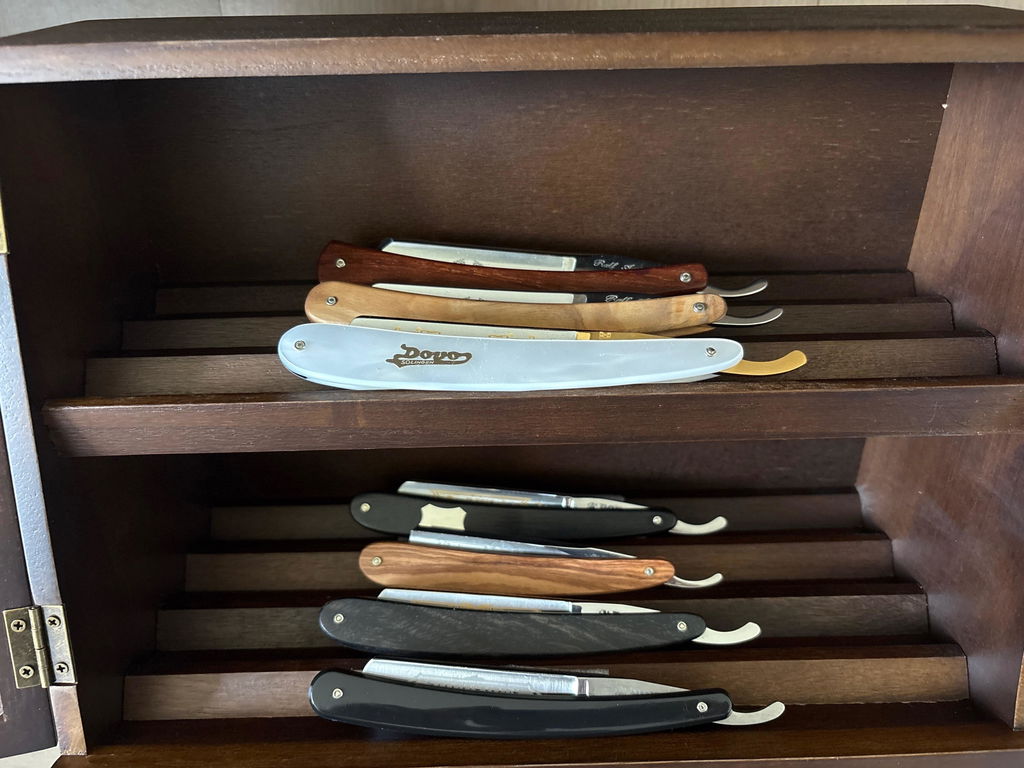





If straight razor shaving feels complicated, you’re in the majority. The tool looks simple, but the choices around size, grind, and point shape can make it feel like you need a whole new hobby just to shave before work.
Here’s the good news: you don’t need to be a barber to make this part of your routine. The “right” Dovo for everyday grooming usually comes down to three decisions you can make with confidence, even if you’re brand new. Dovo itself breaks the differences down into blade width, grind, point shape, and material—exactly the factors that matter when you’re choosing a straight razor you’ll actually use.
This guide is built for shoppers who want a practical daily tool, not a display piece.
What people really want when they search “straight razor shaving”
Most searchers aren’t asking for history. They’re trying to answer questions like:
-
Will a straight razor give me a closer, smoother shave than what I’m using now?
-
What should I buy first so I don’t waste money or get discouraged?
-
Can I realistically do this on weekday mornings, or is it only for slow weekends?
There’s also the unspoken worry: “Am I going to cut myself up?” A straight razor is a sharp tool and it does require skill and a steady hand, especially while you’re learning. The goal isn’t perfection on day one. The goal is a setup that makes good technique easier.

Straight razor for beginners: what to choose first
Let’s make the buying decision feel smaller. Instead of staring at dozens of product pages, start with these three choices: width, grind, and point.
Blade width made simple
Dovo notes that straight razor blades are commonly3/8, 5/8, or 6/8 inches wide, and that5/8 is the most common and recommended for beginners.
Why does width matter in daily use? Because width changes how the razor feels in tight areas and how much “presence” you feel on your face.
-
5/8 tends to feel nimble under the nose and along the jawline, which is why so many beginners start there.
-
6/8 can feel steadier if you have heavier growth or you like a bit more weight in hand, but it may feel larger when you’re learning detail work.
If your main goal is everyday grooming without overthinking it, 5/8 is the safe, proven starting point.
Grind and feel
Grind is about how the blade is shaped and how it behaves against hair. Dovo describes common grinds like flat, half hollow, and full hollow, and notes thatfull hollow is suitable for beginners.
Here’s how that translates to real life:
-
Afull hollow can feel more responsive and lighter on the face, which many daily shavers like once they learn to use a gentle touch.
-
Ahalf hollow often feels a bit more “solid,” which some people prefer if they want a steadier feel.
If you’ve ever used a safety razor and learned that “no pressure” is the rule, that same mindset helps here. A grind that rewards light pressure tends to feel better for daily shaves.
Point styles and why they matter
Point shape impacts two things: how easily you can shave tight areas, and how forgiving the tip feels when your hand angle isn’t perfect yet. Dovo includes point shape as one of the key differences between straight razor types.
In practical terms:
-
A more rounded point style is often friendlier while you build muscle memory.
-
Sharper point styles can be great for precision, but they demand more attention near ears and corners.
If your priority is everyday comfort and confidence, choose the point that feels less “fussy” for your first straight razor.
Why Dovo is a smart everyday choice
When you’re shopping for a daily driver, consistency matters. Dovo’s straight razors are made in Solingen, Germany, and they’re widely chosen by people who want a traditional shave with reliable build quality.
Classic Edge positions itself as straight razor specialists and carries a dedicated Dovo collection, which makes it easier to compare sizes and styles in one place. That’s a big deal when you’re trying to avoid choice overload.
If you want the fastest browse path:
-
Start in the Dovo collection and filter by a beginner-friendly width like 5/8.
-
Then narrow by grind and point style based on how cautious you want your first weeks to feel.

How straight razor shaving fits into real weekday mornings
The biggest misconception is that straight razor shaving always takes forever. The learning phase can add time, yes. But a repeatable routine gets surprisingly quick once your prep and stropping are dialed in.
Prep that saves your skin
Straight razor shaving rewards good prep. You want soft whiskers and slick lather so the blade can do its job without dragging. A shaving brush and quality soap/cream help build a cushiony lather that stays wet while you work.
A small, repeatable prep tends to beat a “special occasion” prep you never actually do. Think warm water, a proper lather, and enough time to shave without rushing the first pass.
-
Warm rinse or shower first
-
Lather that’s creamy, not airy
-
Re-lather between passes so you’re not shaving drying foam
Angle, pressure, and pace
Technique doesn’t need to be complicated, but it does need to be consistent. Wikipedia’s straight razor overview notes shaving is done with the blade at approximatelya 30-degree angle to the skin.
That angle guideline matters because too steep increases scraping, and too flat can feel like it’s not cutting cleanly.
A simple way to think about pressure is: if you’re pressing, you’re doing extra work the edge should be doing.
-
Keep strokes short while you learn
-
Start with the grain for comfort
-
Use your off-hand to keep skin taut in tricky areas (jawline, neck)
OpenTextBC also emphasizes that straight razors require caution and skill development, which is why slow, controlled practice beats speed early on.
Maintenance without the drama
Maintenance is what scares people off, but it’s also what makes straight razor shaving feel satisfying long-term.
Stropping basics
A straight razor needs to be kept extremely sharp, and the edge is delicate. Wikipedia notes that inexpert use may bend or fold the edge, and that stropping on leather periodically helps keep the edge aligned.
The everyday reality is simpler than the internet makes it sound: stropping becomes a quick habit, like brushing your teeth. You’re not trying to reshape the blade daily. You’re maintaining the edge so your shave stays comfortable.
-
Slow strokes on the strop
-
Keep spine and edge in contact
-
Focus on consistency over speed
Honing expectations
Honing isn’t something you should be doing every week at home as a beginner. Many daily shavers rely on professional honing at intervals, especially early on, to remove one big variable from the learning curve.
If you’re new, prioritize:
-
A razor that arrives shave-ready
-
A strop you’ll actually use
-
A simple plan for re-honing when it’s time
That approach keeps “everyday grooming” realistic instead of stressful.
Choose your Dovo with confidence
When you’re ready to make straight razor shaving part of your daily routine, starting with the right razor matters. TheDovo straight razor collection at Classic Edge makes it easy to compare blade widths, grinds, and point styles, so you can choose a razor designed for control, comfort, and regular use:
https://classicedge.ca/collections/dovo-straight-razor-section-by-the-classic-edge-pg-111029
If you’re still in the research phase, theClassic Edge Shaving Store homepage gives you a clear view of the full range of traditional shaving tools, helping you understand how a straight razor fits into your overall setup before you buy:
https://classicedge.ca/
For added clarity, Dovo’s own educational guide breaks down straight razor differences in detail, which can help you feel confident that you’re choosing the right size and style before committing:
https://dovo.com/uk/blog/post/straight-razor-types-differences
Taking a few minutes to compare now can save you months of second-guessing later—and makes the transition to straight razor shaving smoother from the first shave.
A confident close: choosing your first Dovo
If you’re trying to make straight razor shaving part of your everyday grooming, pick the option that reduces friction. That usually means a manageable width like 5/8, a grind that feels comfortable with light pressure, and a point style that doesn’t punish tiny mistakes while you learn.
From there, your results will be less about “finding the perfect razor” and more about building a steady routine. Once technique catches up, straight razor shaving stops feeling intimidating and starts feeling like the calmest part of your morning.
FAQs
1) Is straight razor shaving safe for beginners?
It can be, but it requires caution and skill-building. Start slow, focus on prep and angle, and expect a learning curve.
2) What straight razor size should I buy first?
Dovo notes that 5/8 is the most common blade width and is recommended for beginners, which is why it’s a popular first choice for everyday grooming.
3) Can I use a straight razor every day?
Yes, many people do. Everyday use becomes practical when prep, stropping, and light-pressure technique are consistent.
4) What’s the difference between grind types?
Dovo explains that straight razor types differ in grind (among other features), and different grinds change how the blade feels and responds during shaving.
5) How often do I need to strop or hone?
Stropping is typically part of regular maintenance to help keep the edge aligned, while honing is occasional and depends on use and edge condition